
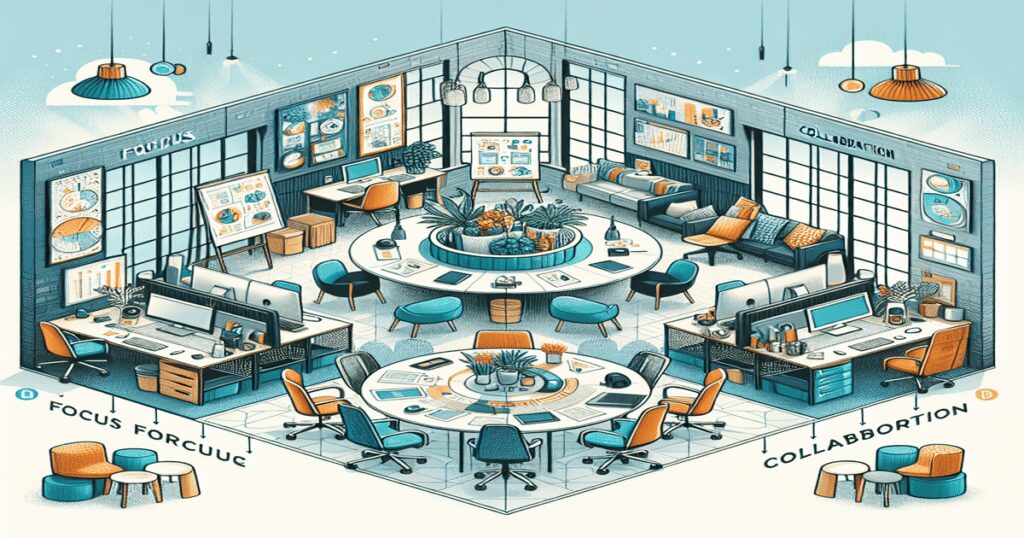
Crafting Office Environments for Focus and Teamwork
In our rapidly changing world, the design of office environments has gained new importance. Companies are trying to find a balance between encouraging individual focus and promoting team collaboration, leading to the question: How can we create spaces that cater to both? Designing office environments for focus and teamwork isn’t just about looks or ergonomics; it’s about creating an atmosphere that boosts productivity, creativity, and well-being. Achieving this balance requires a solid understanding of human behavior, company culture, and the changing nature of work. So, how can organizations design their office spaces to enhance both focus and teamwork? Let’s explore this fascinating subject and examine the strategies, challenges, and solutions.
Table of Contents
- Recognizing the Demands of Modern Office Spaces
- The Impact of Space on Focus and Teamwork
- Essential Components for Designing Spaces for Focus
- Sound Management
- Lighting and Visual Elements
- Ergonomic Furniture
- Essential Components for Designing Spaces for Collaboration
- Open Layouts
- Integrating Technology
- Creative Zones
- Merging Focus and Collaboration: Hybrid Work Environments
- Case Studies: Effective Office Designs
- Technology’s Influence on Modern Office Design
- Future Trends: The Future of Office Spaces
- Conclusion: Designing Spaces that Motivate
Recognizing the Demands of Modern Office Spaces
Today’s workplace is a vibrant ecosystem, rapidly evolving due to technological advancements and changing cultural trends. Central to this transformation is the need to support both focused tasks and collaborative activities. Employees need environments where they can concentrate on individual tasks without interruptions, while also having spaces for teamwork and idea sharing. Understanding these requirements is the initial step in creating office spaces for focus and teamwork.
Modern workplaces must support diverse work styles and preferences. This involves offering a variety of settings employees can select based on their current tasks. Private pods for deep focus, communal tables for brainstorming, and quiet spots for reflection all contribute to a comprehensive office design. Moreover, the increase in remote work has reshaped what employees expect from physical office spaces. An office is no longer just a place to work; it should inspire creativity and nurture a sense of community.
The Impact of Space on Focus and Teamwork
The design of physical space can significantly affect human behavior and productivity. Environmental psychology suggests that our surroundings influence our mood, concentration, and ability to work together. When designing office spaces for focus and teamwork, it’s essential to consider how elements like color, lighting, noise, and layout impact employee performance and satisfaction.
For instance, studies have found that exposure to natural light boosts productivity and well-being, while excessive noise can cause stress and reduce focus. Similarly, colors have psychological effects; blues and greens are calming and can aid focus, while yellows and oranges are energizing and can stimulate creativity and teamwork. Understanding these psychological impacts can guide the design process, ensuring office spaces are conducive to both focused work and collaborative efforts.
Essential Components for Designing Spaces for Focus
Sound Management
Noise is a major obstacle to concentration in workplaces. To design spaces that promote focus, it is crucial to address acoustic challenges. Techniques like using carpets, acoustic panels, and ceiling tiles can help minimize ambient noise. Additionally, providing quiet zones or soundproof booths can offer employees a refuge from the busy office, allowing them to concentrate on tasks requiring deep focus.
Lighting and Visual Elements
Proper lighting is vital for maintaining focus. Natural light is ideal, as it boosts mood and reduces eye strain and fatigue. When natural light is scarce, adjustable LED lighting that mimics daylight can be an effective alternative. Furthermore, minimizing visual distractions is key for maintaining focus. This can be achieved by organizing workspaces to reduce clutter and using partitions or screens to create visual separation between different areas.
Ergonomic Furniture
Ergonomics are crucial for supporting focus. Comfortable, adjustable chairs and desks that support good posture can prevent discomfort and improve concentration. Providing options like standing desks or ergonomic accessories can also cater to different preferences, ensuring employees remain comfortable and focused throughout the day.
Essential Components for Designing Spaces for Collaboration
Open Layouts
Open layouts have become synonymous with collaboration, offering flexible spaces where employees can easily interact and exchange ideas. However, it’s essential to find balance, as open spaces can also lead to distractions. Including elements like breakout areas, movable partitions, and flexible furniture can create a dynamic environment that encourages spontaneous collaboration while still providing areas for focus.
Integrating Technology
In today’s digital world, technology is a cornerstone of collaboration. Designing office spaces for focus and teamwork means seamlessly integrating technology that supports communication and information sharing. This includes video conferencing tools, interactive whiteboards, and collaborative software platforms. Ensuring technology is easily accessible and user-friendly can enhance teamwork and streamline collaborative processes.
Creative Zones
Creative zones are designed to inspire innovation and out-of-the-box thinking. These areas can include features like writable walls, comfortable seating, and access to creative tools and materials. By providing a stimulating environment, employees are encouraged to think creatively and work collaboratively on projects, fostering a culture of innovation within the organization.
Merging Focus and Collaboration: Hybrid Work Environments
The challenge of designing office spaces for focus and teamwork lies in finding the right balance between the two. Hybrid work environments offer a solution by combining elements of both focused work and collaborative spaces. These environments are adaptable, allowing employees to choose the setting that best suits their needs at any given time.
Hybrid workspaces often feature modular furniture, movable walls, and multipurpose areas that can be reconfigured for different activities. By offering a variety of spaces, from quiet zones to open collaboration areas, hybrid workspaces can accommodate the diverse needs of a modern workforce. This flexibility not only enhances productivity but also supports employee well-being by providing choice and control over their work environment.
Case Studies: Effective Office Designs
Examining real-world examples can provide valuable insights into effective office design. Several companies have successfully implemented office spaces that balance focus and collaboration, serving as models for others looking to redesign their work environments.
One notable example is the headquarters of a leading tech company, which features a variety of workspaces tailored to different activities. The office includes quiet zones for focused work, open collaboration areas with advanced technology, and creative spaces designed to inspire innovation. By prioritizing employee needs and incorporating feedback into the design process, the company has created an environment that supports both productivity and collaboration.
Another example is a global consulting firm that redesigned its offices to incorporate flexible workspaces. The firm introduced hot-desking, where employees can choose from a range of workstations each day, as well as collaborative hubs for team meetings. This approach has not only optimized space utilization but also fostered a culture of collaboration and adaptability.
Technology’s Influence on Modern Office Design
Technology plays a pivotal role in modern office design, enabling both focus and collaboration. Smart office solutions, such as automated lighting and climate control, can enhance comfort and concentration. Additionally, technology that supports remote work, such as secure VPNs and cloud-based collaboration tools, ensures that employees can work efficiently from any location.
The integration of technology in office design also extends to data-driven insights. By analyzing data on space utilization and employee preferences, organizations can make informed decisions about how to optimize their office layout and design. This approach not only improves efficiency but also aligns the workspace with the evolving needs of the workforce.
Future Trends: The Future of Office Spaces
As the nature of work continues to evolve, so too will the design of office spaces. Future trends are likely to focus on sustainability, wellness, and personalization. Sustainable design practices, such as using eco-friendly materials and energy-efficient systems, will become increasingly important as organizations strive to reduce their environmental impact.
Wellness will also be a key consideration, with office designs incorporating elements that promote physical and mental well-being. This could include features such as biophilic design, which integrates natural elements into the workspace, and wellness amenities such as fitness centers and meditation rooms.
Personalization will play a significant role in future office design, with spaces tailored to individual preferences and work styles. Advances in technology, such as artificial intelligence and the Internet of Things, will enable more personalized and responsive work environments, enhancing both focus and collaboration.
Conclusion: Designing Spaces that Motivate
Creating office spaces for focus and teamwork is a complex but rewarding task. By understanding the needs of the modern workforce and incorporating elements that support both individual and team activities, organizations can create environments that inspire productivity, creativity, and well-being. As we look to the future, the challenge will be to continue adapting to the changing landscape of work, ensuring that office spaces remain relevant and effective in supporting the diverse needs of employees. By embracing innovation and prioritizing the human experience, we can design workspaces that not only meet the demands of today but also anticipate the needs of tomorrow.